


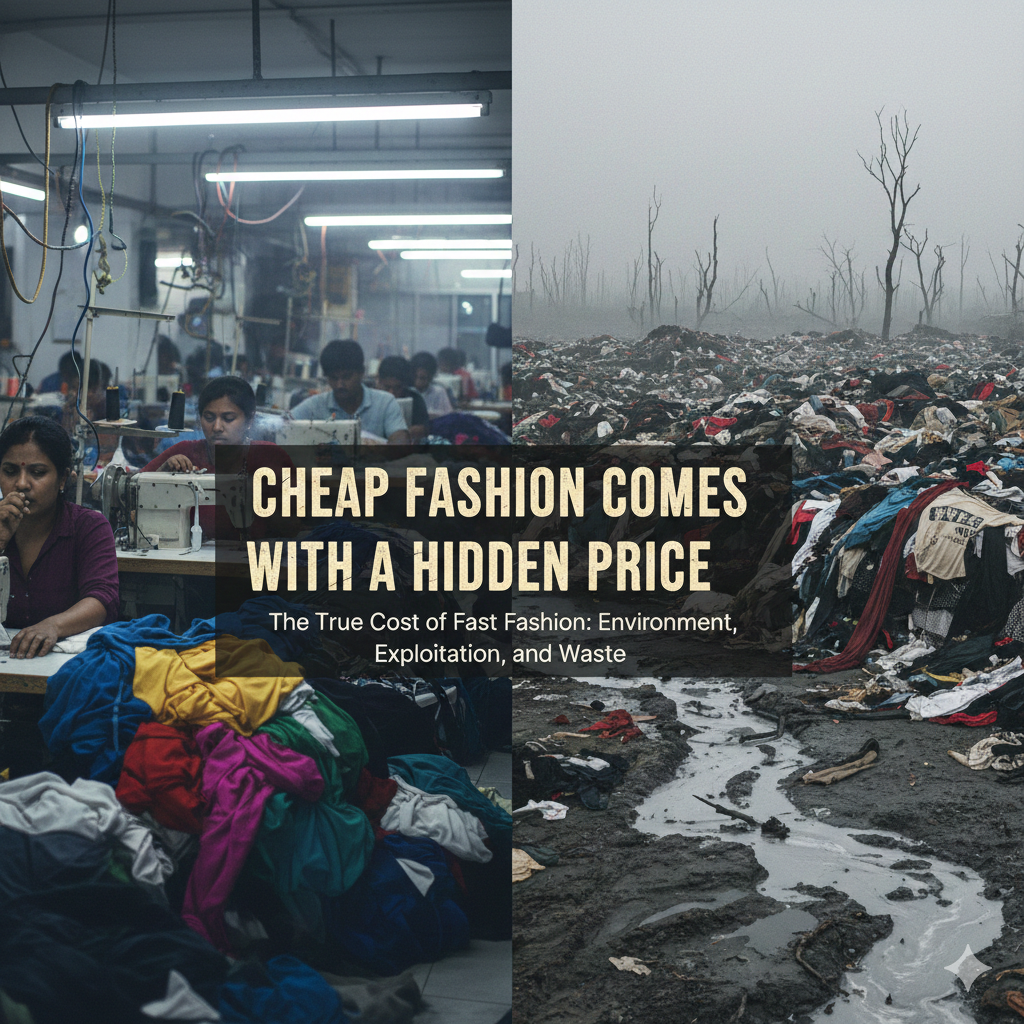
Cheap fashion has become a big part of our daily lives. Everywhere we look, we see low-cost clothes, fast fashion brands, and trendy outfits at very cheap prices. Online stores and shopping malls are full of affordable fashion items that attract millions of buyers. At first glance, cheap fashion looks like a great deal. We save money, follow trends, and buy more clothes. But behind this low price, there is a hidden cost that most people ignore.
Cheap fashion comes with a hidden price that affects the environment, workers, human health, and the global economy. This article explains the real truth behind fast and cheap fashion and why it is more expensive than it seems.
What Is Cheap Fashion?
Cheap fashion, also known as fast fashion, refers to clothing that is produced quickly, sold at very low prices, and designed to follow the latest trends. Fast fashion brands focus on speed and profit instead of quality and sustainability.
These clothes are often:
- Made from low-quality materials
- Produced in large quantities
- Designed to be worn for a short time
- Easily thrown away
While cheap fashion makes trendy clothing affordable, it creates serious long-term problems.
Environmental Damage of Cheap Fashion
One of the biggest hidden prices of cheap fashion is environmental pollution. The fashion industry is one of the most polluting industries in the world.
1. Water Pollution
Cheap fashion brands use harmful chemicals to dye fabrics. These chemicals are often released into rivers and oceans. This pollutes drinking water and kills aquatic life. Textile waste water affects millions of people living near factories.
2. Massive Water Usage
Producing cheap clothes uses huge amounts of water. For example, one cotton T-shirt requires thousands of liters of water. Fast fashion increases water scarcity in many countries.
3. Textile Waste
Cheap clothes are thrown away very quickly. Most fast fashion items end up in landfills. Synthetic fabrics like polyester take hundreds of years to decompose, increasing environmental waste.
Hidden Human Cost: Worker Exploitation
The low price of cheap fashion is often paid by factory workers in developing countries.
1. Low Wages
Fast fashion brands outsource production to countries where labor is cheap. Workers are paid very low salaries that are not enough for basic living needs.
2. Unsafe Working Conditions
Many garment factories have unsafe buildings, long working hours, and poor safety standards. Workers risk their lives to produce cheap clothes.
3. Child Labor
In some cases, cheap fashion production involves child labor. Children are forced to work instead of going to school, which destroys their future.
The hidden price of cheap fashion includes human suffering and injustice.
Health Risks of Cheap Fashion
Cheap fashion is also harmful to consumer health.
1. Toxic Chemicals
Low-cost clothes often contain harmful chemicals like formaldehyde and heavy metals. These chemicals can cause skin allergies, breathing problems, and other health issues.
2. Poor Fabric Quality
Cheap fabrics do not allow the skin to breathe properly. Wearing low-quality clothing for long periods can cause rashes, itching, and discomfort.
Consumers pay the hidden health price of cheap fashion without realizing it.
Economic Impact of Cheap Fashion
Cheap fashion damages the economy in many ways.
1. Short Clothing Lifespan
Fast fashion clothes wear out quickly. Consumers buy again and again, spending more money in the long run. Cheap fashion is not actually cheap.
2. Loss of Local Businesses
Small and local clothing businesses cannot compete with fast fashion brands. This leads to job losses and weak local economies.
3. Overconsumption Culture
Cheap prices encourage people to buy more than they need. This creates waste, debt, and unhealthy shopping habits.
Psychological Effects of Fast Fashion
Cheap fashion also affects mental health and self-image.
- Constant trend changes create pressure to look perfect
- Social media promotes overbuying and comparison
- People feel dissatisfied and insecure
This cycle benefits fast fashion companies but harms consumers emotionally.
Why Sustainable Fashion Is the Better Choice
Sustainable fashion focuses on quality, ethics, and environmental care.
Benefits of sustainable fashion:
- Long-lasting clothing
- Fair wages for workers
- Less environmental damage
- Better fabric quality
- Long-term savings
Buying fewer but better clothes reduces the hidden price of fashion.
How Consumers Can Make a Difference
You don’t need to stop shopping completely. Small changes can reduce the impact of cheap fashion.
- Buy quality instead of quantity
- Support ethical and sustainable brands
- Reuse, recycle, and donate clothes
- Avoid impulse buying
- Choose timeless styles
Every smart choice helps reduce the hidden cost of fast fashion.
Conclusion
Cheap fashion comes with a hidden price that goes far beyond low cost tags. While fast fashion offers trendy clothes at affordable prices, it damages the environment, exploits workers, harms consumer health, and promotes wasteful habits. The true cost of cheap fashion is paid by the planet, poor laborers, and future generations.
By choosing sustainable fashion and responsible shopping habits, we can reduce these negative effects. Fashion should not come at the cost of human lives or environmental destruction. In the end, cheap fashion is only cheap at the checkout, not in reality.
