


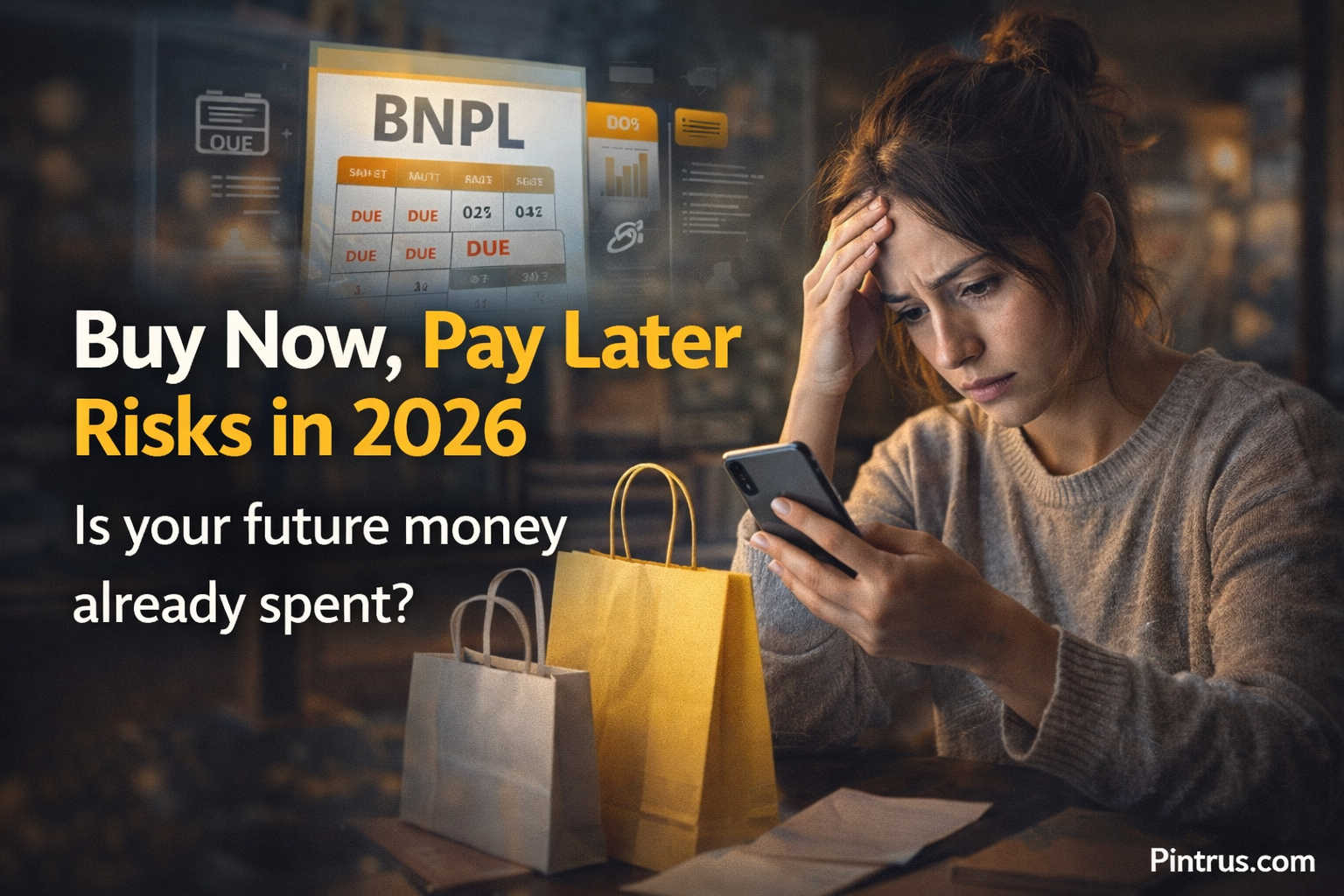
You’ve seen the button.
“Split into 4 payments. Zero interest.”
It sits there, calm and confident, like it’s doing you a favor. And most days, you click it without thinking. Because why wouldn’t you? It’s easy. It’s painless. It feels… harmless.
That’s the problem.
By 2026, Buy Now, Pay Later isn’t new, clever, or misunderstood anymore. People know what it is now. And a lot of them are tired. Confused. Overextended. Wondering how a few small payments turned into a monthly headache.
Let’s talk about why.
BNPL Doesn’t Announce Itself as Debt. That’s on Purpose.
Here’s the first trick.
BNPL never walks in shouting, “Hello, I’m debt.”
No interest rate slapped in your face.
No credit card number printed in bold.
No long pause where you rethink your life choices.
It feels casual. Friendly. Almost disposable.
And when something feels casual, we treat it casually. That’s human nature. You don’t budget carefully for things that don’t feel serious.
BNPL knows that.
The “Small Payments” Lie We Tell Ourselves
Let me guess. You’ve said this before:
“It’s only $75 every two weeks.”
Sure. That’s fine. Once.
But then another plan starts. And another. Different app. Different due date. Same logic.
Before you realize what’s happening, future-you is paying for past-you’s confidence.
Here’s where people get stuck:
- Payments feel disconnected from purchases
- Total spending becomes fuzzy
- Budgets quietly shrink without warning
Nothing dramatic happens. No alarms go off. You just wake up one month wondering why your paycheck already feels spent.
Late Fees Didn’t Disappear. They Just Got Sneakier.
Early BNPL marketing made a big deal about “no fees.”
That era is over.
In 2026, late fees are common. Not huge. Just annoying enough to hurt.
Miss a payment by a day? Fee.
Auto-debit fails because your card changed? Fee.
Try to move a due date? Sometimes… fee.
It’s death by a thousand paper cuts. And those cuts add up fast when you’re juggling multiple plans.
Credit Scores Are Now Watching You
For a long time, BNPL lived in a cozy little corner where credit scores couldn’t see it. People assumed it still worked that way.
Wrong.
More providers now report missed payments. Some report everything. And many users don’t realize it until damage is already done.
That’s not evil. It’s just poorly understood.
BNPL feels informal, but the consequences aren’t anymore.
Refunds: Where Optimism Goes to Get Lost
Let’s say you return an item. Easy, right?
Not always.
Refunds don’t always sync cleanly with installment plans. That means:
- You keep paying while the return processes
- Refunds arrive late or partially
- Customer support tells you to “wait it out”
There’s something uniquely irritating about paying for something that’s already back in a warehouse.
The Quiet Stress Nobody Advertises
This is the part that never makes it into glossy ads.
BNPL creates background stress.
Not panic. Not crisis. Just… noise.
You think about due dates more than you want to.
You double-check balances.
You wonder if you forgot one.
It’s mental clutter. And it’s exhausting.
People blame themselves for feeling overwhelmed, without realizing how many small obligations they’re carrying.
Younger Users Are Learning Hard Lessons Early
BNPL is especially popular with younger shoppers. That’s not an insult. It’s just reality.
But here’s the risk: when you haven’t built credit experience yet, it’s easy to mistake convenience for safety.
Common mistakes look like this:
- Treating BNPL as free money
- Ignoring how overlapping plans stack up
- Learning credit consequences the hard way
Recovering from early financial mistakes takes time. And patience. And discipline most people weren’t taught.
Is Buy Now, Pay Later Always a Bad Idea? No.
Let’s calm down for a second. BNPL isn’t a villain twirling a mustache.
Used intentionally, it can help with:
- Short-term cash timing
- Emergency purchases
- Avoiding high-interest credit cards
The trouble starts when BNPL becomes the default, not the exception.
If you’re using it because you don’t actually have the money yet, that’s not flexibility. That’s borrowing with nicer branding.
How People Actually Use BNPL Without Regret
If you’re going to use it, treat it like a grown-up financial decision. Not a checkout shortcut.
A few rules that save real people real stress:
- Keep active plans to one or two max
- Track payments outside the app
- Skip BNPL for impulse buys
- Treat installments like bills, not suggestions
- Ask one blunt question before clicking
Would I still buy this if I had to pay in full today?
If the answer is no, close the tab.
What’s Coming Next (Ready or Not)
Regulation is tightening. Reporting is expanding. Transparency is improving.
That’s good news.
It also means mistakes won’t stay invisible anymore.
BNPL is growing up. And grown-up systems don’t cushion careless behavior.
Final Thought: Easy Payments Don’t Mean Easy Consequences
Buy Now, Pay Later didn’t ruin anyone overnight. It did something quieter.
It made spending feel lighter than it really was.
It delayed consequences just long enough to be dangerous.
In 2026, the choice is clear. Use BNPL deliberately, with limits and awareness, and it can be useful. Use it casually, and it will slowly take control of your future money.
No drama.
No warning.
Just a calendar full of payments you barely remember agreeing to.
That’s the real risk.
