


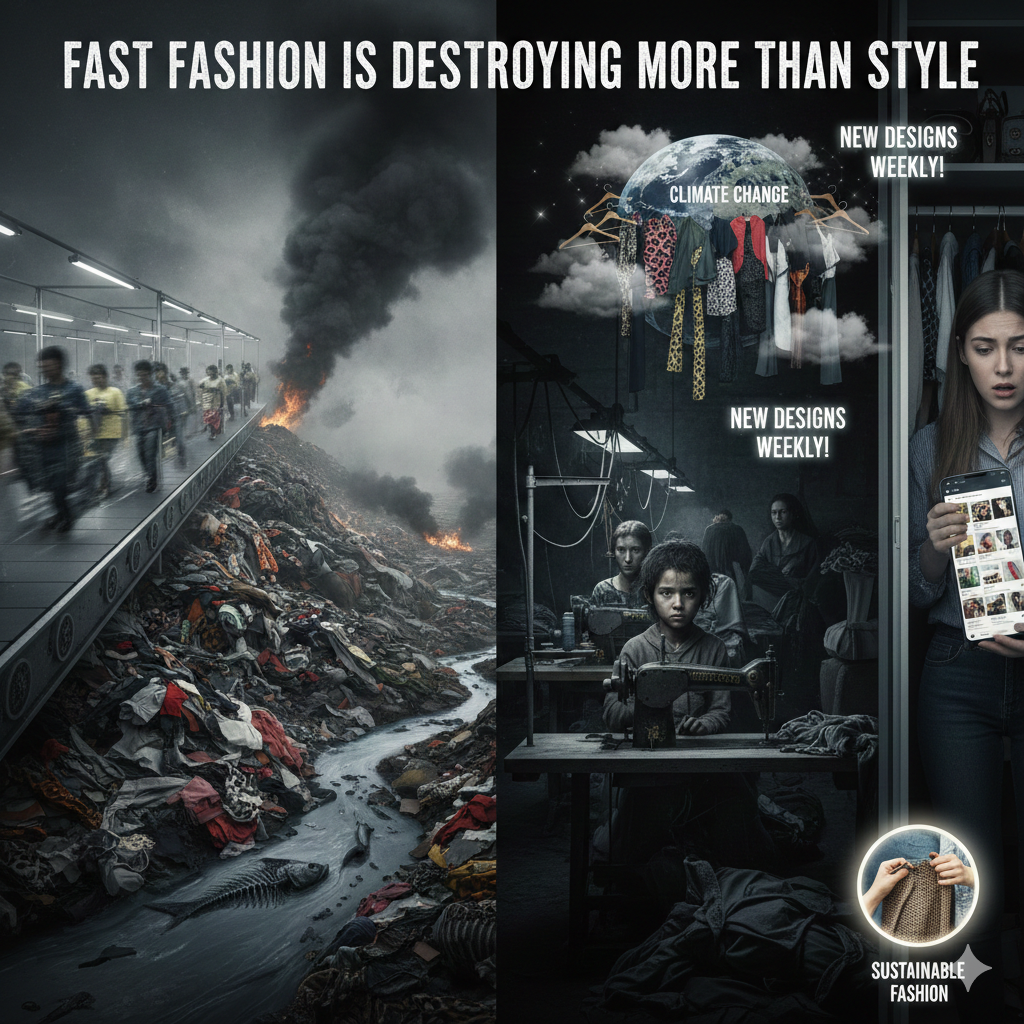
Fast fashion has completely changed the way people shop for clothes. Trendy outfits are now available at extremely low prices, updated every few weeks, and promoted aggressively on social media. At first glance, fast fashion looks exciting, affordable, and convenient. But behind the bright lights and stylish displays, fast fashion is destroying far more than just personal style. It is damaging the environment, exploiting workers, and encouraging a culture of waste and overconsumption.
What Is Fast Fashion?
Fast fashion refers to clothing brands that quickly copy runway trends and celebrity styles, produce them at low cost, and sell them to consumers at cheap prices. Popular fast fashion brands release new collections every few weeks instead of following traditional seasonal fashion cycles. This rapid production model is designed to encourage frequent shopping and short-term use of clothing.
While fast fashion makes trendy clothing accessible, it also promotes disposable fashion. Clothes are worn only a few times before being thrown away, which creates serious long-term consequences.
Environmental Damage Caused by Fast Fashion
One of the biggest problems with fast fashion is its impact on the environment. The fashion industry is one of the largest polluters in the world, and fast fashion plays a major role in this damage.
Fast fashion brands use massive amounts of water to produce cheap fabrics like cotton and polyester. Textile dyeing pollutes rivers and water systems with toxic chemicals, harming both wildlife and human communities. Synthetic fabrics release microplastics into oceans every time they are washed, contributing to global plastic pollution.
Additionally, fast fashion creates enormous textile waste. Millions of tons of clothing end up in landfills every year because fast fashion items are made cheaply and do not last long. Many of these materials take decades to decompose, releasing harmful gases into the environment.
Fast Fashion and Climate Change
Fast fashion significantly contributes to climate change. The production, transportation, and disposal of cheap clothing require huge amounts of energy, mostly from fossil fuels. From factory machines to global shipping, fast fashion increases carbon emissions at every stage.
Because fast fashion encourages constant buying, the demand for production never slows down. This endless cycle of manufacturing and disposal accelerates global warming and environmental destruction.
Exploitation of Workers in Fast Fashion Industry
Behind the low prices of fast fashion are underpaid and overworked laborers. Many fast fashion brands outsource production to developing countries where labor laws are weak or poorly enforced. Workers often face unsafe conditions, long hours, and extremely low wages.
Garment workers, including women and even children in some cases, are forced to work in factories that prioritize speed over safety. Factory accidents, health problems, and human rights violations are common in fast fashion supply chains.
While consumers enjoy cheap clothing, workers pay the real price with their health, dignity, and livelihoods.
How Fast Fashion Is Destroying Personal Style
Fast fashion is not only harming the planet and people; it is also destroying individuality and creativity in fashion. Because trends change so quickly, people feel pressured to constantly update their wardrobes. This creates anxiety and dissatisfaction, making style feel temporary and meaningless.
Instead of developing a personal fashion identity, consumers follow viral trends that disappear within weeks. Everyone ends up wearing similar outfits, copied from the same fast fashion brands. As a result, fashion loses its originality and cultural value.
Psychological Impact of Fast Fashion
Fast fashion fuels impulse buying and shopping addiction. Low prices and limited-time collections create a sense of urgency, pushing consumers to buy more than they need. This leads to cluttered wardrobes, financial stress, and emotional dissatisfaction.
The short-lived excitement of buying fast fashion quickly fades, forcing consumers to repeat the cycle. This behavior benefits brands but harms mental well-being and encourages unhealthy consumption habits.
The Role of Social Media in Fast Fashion Growth
Social media platforms have played a major role in promoting fast fashion. Influencers constantly showcase new outfits, encouraging followers to buy more and keep up with trends. Outfit hauls, discount codes, and viral fashion challenges push fast fashion culture even further.
This constant exposure normalizes overconsumption and makes sustainable fashion seem boring or expensive, even though fast fashion’s hidden costs are far greater.
Sustainable Fashion as an Alternative
Sustainable fashion offers a powerful alternative to fast fashion. It focuses on ethical production, high-quality materials, fair wages, and environmentally friendly practices. Slow fashion brands produce fewer items, designed to last longer and reduce waste.
Consumers can also make a difference by buying second-hand clothing, supporting local designers, and choosing quality over quantity. Even small changes, like wearing clothes longer and avoiding impulse purchases, can reduce the negative impact of fast fashion.
What Consumers Can Do to Stop Fast Fashion Damage
Consumers play a crucial role in changing the fashion industry. By becoming more conscious shoppers, people can reduce demand for fast fashion. Asking questions about where clothes are made, how workers are treated, and what materials are used can push brands toward ethical practices.
Choosing sustainable fashion is not about perfection but progress. Every responsible purchase sends a message that style should not come at the cost of human lives or environmental destruction.
Conclusion
Fast fashion is destroying more than just style. It is damaging the environment, worsening climate change, exploiting workers, and creating a culture of waste and dissatisfaction. While fast fashion may offer cheap and trendy clothing, its hidden costs are far too high.
The future of fashion depends on awareness and responsibility. By rejecting fast fashion and embracing sustainable choices, consumers can help protect the planet, support ethical labor, and restore meaning to personal style. True fashion should express identity and creativity not destruction and exploitation.
