


Understanding business days sounds simple, yet it often causes confusion in banking, shipping, legal contracts, and customer service. Many delays, misunderstandings, and frustrated emails begin with one small question: What exactly counts as a business day?
This guide explains business days clearly, using real-world logic, verified standards, and plain language. No assumptions. No filler. Just facts, clarity, and practical examples.
What Is a Business Day?
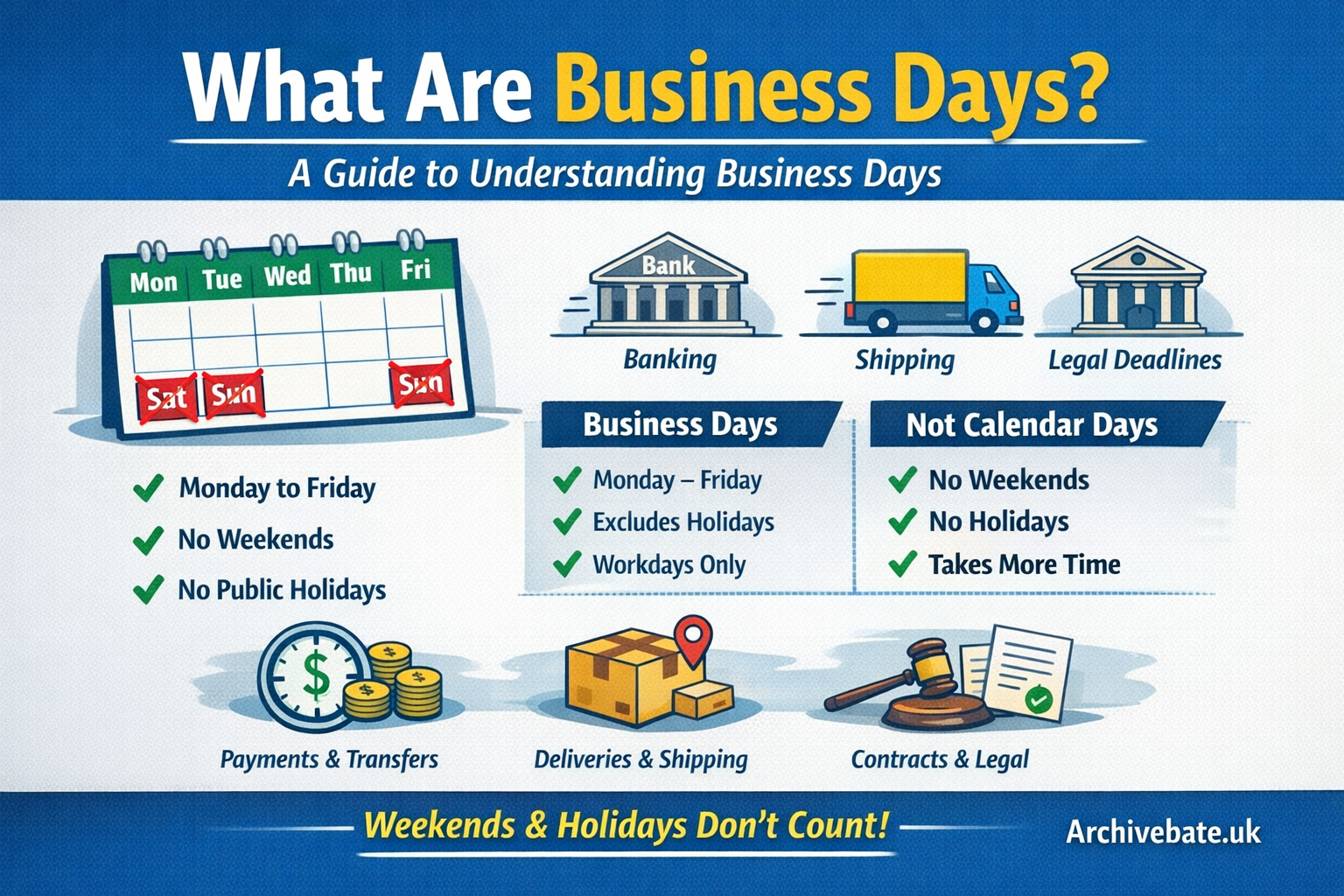
A business day is a working day when most organizations operate and provide services. In most countries, a business day runs from Monday to Friday, excluding weekends and official public holidays.
Businesses, banks, government offices, and delivery companies use business days to measure time for:
- Payments
- Order processing
- Legal deadlines
- Customer support responses
In short, business days exist to define working time, not calendar time.
Standard Business Days Explained
While exact rules may vary by country or industry, the most widely accepted definition includes:
- Monday to Friday
- Excludes Saturdays and Sundays
- Excludes public or national holidays
This standard appears across banking systems, legal documents, payroll policies, and shipping services worldwide.
If a service promises action within “3 business days,” weekends and holidays do not count.
Business Days vs Calendar Days
Many people confuse business days with calendar days. The difference matters more than it seems.
Calendar Days
- Include all days of the week
- Count weekends and holidays
- Used for general time tracking
Business Days
- Only working weekdays
- Exclude weekends and holidays
- Used for professional and legal timelines
Example:
If you submit a request on Friday and the response time is “2 business days,” the expected response usually arrives on Tuesday, not Sunday.
Why Businesses Use Business Days
Companies rely on business days for practical reasons. Offices close on weekends. Staff work fixed schedules. Systems follow operational calendars.
Business days help organizations:
- Set realistic service expectations
- Align internal workflows
- Avoid confusion in contracts
- Maintain fairness across customers
They also protect businesses from promising delivery or support when operations are closed.
Business Days in Different Industries
Not all industries use business days in the same way. Context always matters.
Banking and Finance
Banks process transactions only on business days. This includes:
- Wire transfers
- Check clearing
- Loan approvals
- Interest calculations
A transfer made late Friday may not process until Monday or later if a holiday falls in between.
Shipping and Logistics
Courier companies often quote delivery times in business days.
- A “5 business day” shipment excludes weekends
- Weather or holidays may extend timelines
- Some premium services operate on Saturdays, but that requires confirmation
Legal and Government Services
Courts, tax offices, and government agencies strictly follow business day calendars.
Deadlines often specify business days to ensure fairness and accessibility.
Do Business Days Include Holidays?
No. Public holidays are not business days.
This applies to:
- National holidays
- Government-declared holidays
- Bank holidays
If a holiday falls on a weekday, that day does not count as a business day.
Example:
If Monday is a public holiday, then Tuesday becomes the next business day.
Are Business Days the Same Worldwide?
Business days follow similar logic globally, but local differences exist.
Key variations include:
- Different weekends (some countries observe Friday–Saturday weekends)
- Country-specific holidays
- Industry-specific schedules
Because of this, international contracts often define business days clearly to avoid disputes.
Common Situations Where Business Days Matter
Business days affect daily decisions more than people realize.
You encounter them when:
- Waiting for a refund
- Tracking an online order
- Receiving salary payments
- Responding to legal notices
- Submitting official documents
Understanding business days helps manage expectations and reduce unnecessary follow-ups.
How to Calculate Business Days Correctly
To calculate business days accurately, follow a simple process.
- Identify the start date
- Exclude weekends
- Remove public holidays
- Count only working weekdays
Always check the local holiday calendar if timing matters.
Common Misunderstandings About Business Days
Many disputes happen due to incorrect assumptions.
Frequent mistakes include:
- Assuming Saturday counts as a business day
- Ignoring public holidays
- Expecting same-day processing after business hours
- Confusing business days with working hours
Most organizations consider a business day complete only during standard operating hours.
Why Clear Business Day Definitions Build Trust
Clear communication around business days protects both businesses and customers.
It helps by:
- Reducing service complaints
- Preventing legal disputes
- Improving transparency
- Strengthening customer confidence
Companies that define timelines clearly appear more professional and reliable.
Final Thoughts: Business Days Made Simple
A business day is not complicated, but it demands clarity. It represents a working weekday, excluding weekends and public holidays. This definition keeps systems fair, predictable, and manageable.
If you deal with payments, deliveries, deadlines, or contracts, understanding business days saves time and frustration. When in doubt, always check how an organization defines them.
Clear expectations lead to smoother experiences and fewer “Why hasn’t this arrived yet?” emails.
That alone makes business days worth understanding.
